
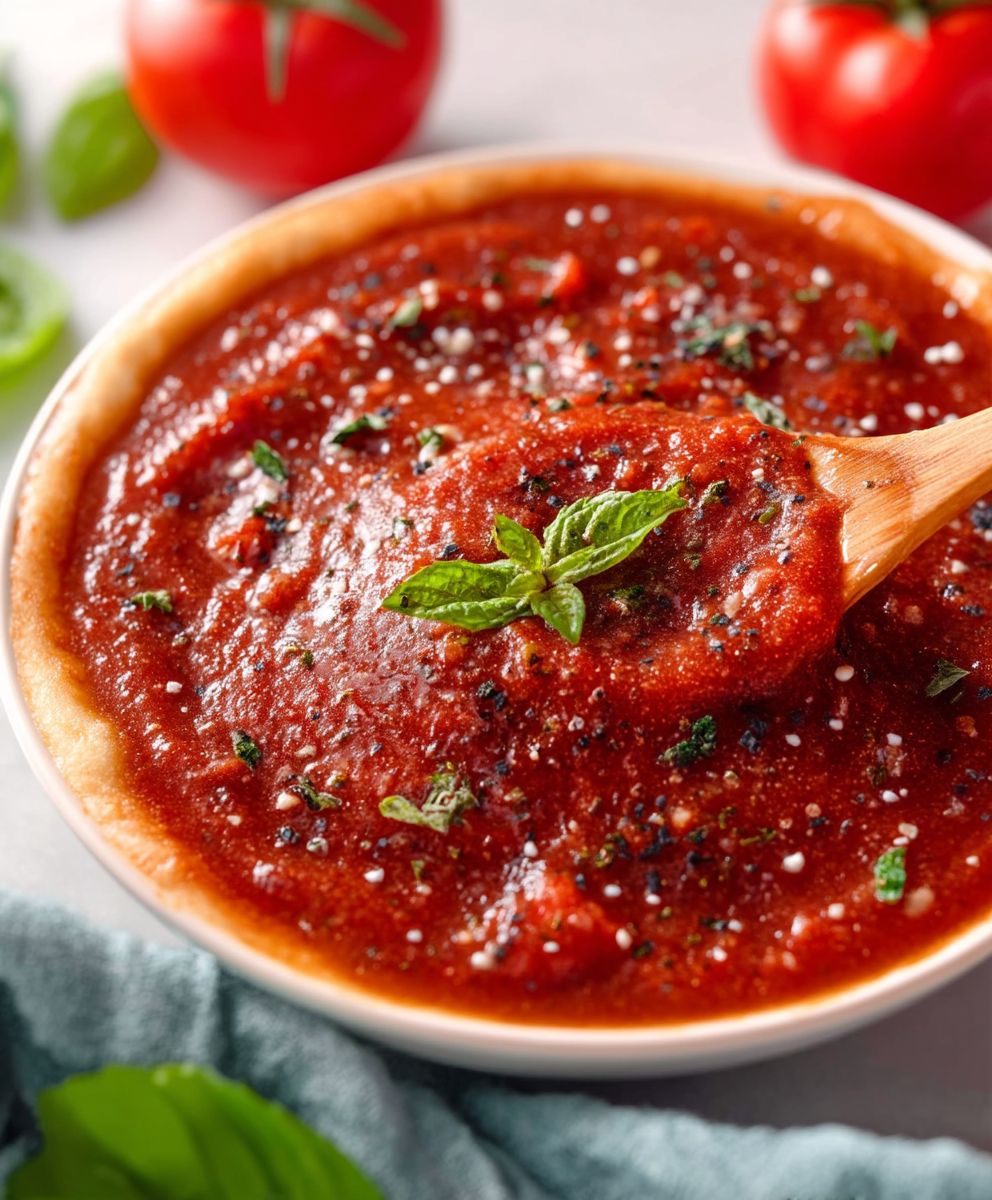

Forget those watery, bland red puddles masquerading as pizza sauce from a jar. Making homemade pizza is a sacred weekend ritual, and the true secret weapon is undoubtedly the foundational flavor beneath the toppings.
Today, we are mastering theRich Pizza Sauce: The Ultimate Recipe for Flavorful Homemade Pizzas—it’s the cornerstone that transforms a simple dough disk into pure culinary genius.
- This recipe simplifies the simmering process, requiring minimal stirring while maximizing the deep, slow-cooked Italian flavor profile.
- Experience layers of herbaceous depth, balanced acidity, and subtle sweetness, perfect for pairing with any cheese or hearty topping.
- Achieve a vibrant, deep ruby-red color and a luxuriously thick texture that clings beautifully to the robust pizza crust.
- Freeze large batches easily for future pizza nights, lasagna, or as a robust dipping sauce for baked mozzarella sticks.
The Secret Weapon of Homemade Pizza
I once attempted to host a gourmet pizza party armed with nothing but determination and three jars of generic, shelf-stable tomato sauce. The result? A flavor profile so aggressively metallic and thin, it made the otherwise beautiful homemade dough taste like a cardboard raft floating in disappointment. My guests were polite, but their eyes held the unmistakable sorrow of culinary betrayal. That night, I swore a solemn oath to the tomato gods that I would never again compromise on the foundation of the perfect pizza.
The difference between a passable pizza and one that warrants immediate social media boasting lies entirely in the depth and richness of your sauce. A truly magnificent pizza sauce should be complex, balancing the sweetness of the fruit with earthy herbs, a hint of heat, and the necessary acidity to cut through fatty cheeses and rich meats. We aren’t just opening a can and splashing it on; we are building layers of flavor that evolve slowly on the stove. This robust tomato sauce is designed to be the quiet backbone that supports the entire pizza without overpowering it, providing that deep, savory punch that keeps people reaching for another slice.
Building the Ultimate Flavor Base: Simmering for Success
Many novice cooks make the mistake of boiling their pizza sauce rapidly, thinking speed equals efficiency. In reality, tomato sauce demands patience. We aim for a slow simmer—the culinary equivalent of a luxurious spa day for your ingredients. This low and slow method allows the raw, tinny notes in the canned tomatoes to mellow and concentrate, releasing their natural sugars. Furthermore, slow simmering allows the fat (olive oil) to fully integrate with the water-based tomatoes, achieving that luxurious, velvety texture that prevents the finished pizza from becoming soggy.
We start by gently sweating the aromatics—finely diced onion and minced fresh garlic. This crucial step is not about browning; it’s about transparency. By cooking them slowly in good quality olive oil, you release their sulfur compounds gently, turning sharp flavors into sweet, complex undertones. Once the onions are translucent and the kitchen smells divine—like a trattoria in Tuscany—you introduce the tomato paste. Sautéing the tomato paste for just two minutes before adding the liquid “blooms” its flavor, deepening its natural umami and achieving a richness that transforms the entire ultimate pizza base.
If you skip the blooming step, the sauce will taste flat, lacking that necessary vibrant depth. This slow process, combined with high-quality ingredients, is what sets this recipe apart, delivering the depth required for theRich Pizza Sauce: The Ultimate Recipe for Flavorful Homemade Pizzas. Remember, the goal is concentration. As the sauce reduces, the water evaporates, leaving behind pure, intense tomato essence. Stirring occasionally, perhaps every 15-20 minutes, is key to preventing sticking, but avoid constantly fussing over it. Let the low heat do the heavy lifting for about 45 to 60 minutes, ensuring every drop contributes to the final masterpiece.
Ingredients for Rich Pizza Sauce: The Ultimate Recipe for Flavorful Homemade Pizzas
Here’s what you’ll need to make this delicious dish:
- Canned Crushed TomatoesUse a high-quality brand of crushed San Marzano or Muir Glen style tomatoes; the quality of the tomatoes dictates 80% of the sauce’s final flavor.
- Tomato PasteThis essential ingredient is bloomed in oil to add concentrated umami and rich, deep color to the overall sauce body.
- Yellow OnionFinely diced, this aromatic provides the foundational sweetness and body that balances the acidity of the tomatoes during the long simmer.
- Fresh Garlic ClovesUse whole, fresh cloves, finely minced or pressed, to provide sharp flavor that mellows into sweetness when cooked slowly.
- Extra Virgin Olive OilThe base fat used for sweating the aromatics; choose a robust, flavorful oil, but not one so pungent that it dominates the herbs.
- Dried Oregano and Dried BasilUsing dried herbs here is preferable as they hold up better during the long cooking time, releasing their earthy oils slowly.
- Red Pepper FlakesA small pinch adds a crucial hint of warmth and spice, enhancing the overall complexity without making the sauce noticeably spicy.
- Granulated SugarJust a teaspoon helps counteract the high acidity inherent in canned tomatoes, ensuring the sauce is perfectly balanced and palatable.
- Salt and Freshly Ground Black PepperCrucial for seasoning; taste the sauce after the full simmer to adjust seasoning and bring all the flavors into sharp focus.
The full ingredients list, including measurements, is provided in the recipe card directly below.
How to Make Rich Pizza Sauce: The Ultimate Recipe for Flavorful Homemade Pizzas
Follow these simple steps to prepare this delicious dish:
-
Step 1: Sweat the Aromatics and Bloom the Paste
Heat the olive oil in a heavy-bottomed pot or Dutch oven over medium-low heat. Add the diced onion and cook gently for 8 to 10 minutes until translucent and soft, but not browned. Add the minced garlic and cook for 1 minute until fragrant. Push the aromatics aside and add the tomato paste to the exposed bottom of the pot; cook and stir the paste for 2 minutes to deepen its flavor.
-
Step 2: Combine and Season
Stir the tomato paste and aromatics together. Pour in the crushed tomatoes. Add the dried oregano, dried basil, red pepper flakes, granulated sugar, salt, and black pepper. Stir all the ingredients thoroughly until they are well combined. Reduce the heat immediately to the lowest setting possible.
-
Step 3: The Slow Simmer
Bring the sauce to a very gentle simmer—it should barely bubble. Cover the pot loosely (or slightly ajar) and allow the sauce to simmer for 45 minutes to 1 hour. This slow simmer is essential for developing the robust tomato sauce flavor and achieving the desired thickness. Stir the sauce every 15 minutes to prevent the thick bottom layer from sticking or scorching.
-
Step 4: Adjust and Finish
After the simmering time, the sauce should have visibly reduced and thickened considerably. Remove the pot from the heat. Taste the sauce and adjust the salt, sugar, or pepper as necessary. If the sauce is too thick for your preference, add a tablespoon of water or broth at a time until the desired consistency is achieved. If you prefer a smoother sauce, you may use an immersion blender at this stage, but typically, a rustic texture works best for pizza.
Transfer the sauce to an airtight container and allow it to cool completely before using it on your dough or storing it. This resting period allows the flavors to truly marry, resulting in the most flavorful homemade pizzas possible.
Troubleshooting and Recipe Tips for the Perfect Sauce
Why does my sauce taste bitter or metallic?
Bitterness often stems from two sources: using cheap quality canned tomatoes or not simmering long enough to cook out the acidity. If your sauce tastes too acidic even after simmering, try adding a tiny pinch of baking soda (about 1/8 teaspoon) at the end. This neutralizes the acid instantly. Alternatively, ensure you add the teaspoon of sugar listed in the ingredients, as it balances the strong tomato flavor.
How can I make the pizza sauce thicker?
If your sauce is too watery after 60 minutes, remove the lid and increase the heat slightly (to a medium-low simmer). Continue cooking, uncovered, for an additional 15 to 20 minutes until the excess liquid evaporates. Remember, the sauce should be thick enough to cling to the back of a spoon, preventing it from soaking into your pizza dough.
Can I freeze large batches of this sauce?
Absolutely! This recipe is ideal for batch cooking. Once the sauce is completely cooled, transfer it into freezer-safe containers or heavy-duty freezer bags, leaving a little headspace if using containers. Label them clearly with the date. This robust tomato sauce will maintain its quality for up to six months, making future pizza nights incredibly easy.
What if I only have dried herbs on hand?
While fresh basil can offer a brighter finish, using dried herbs for the long simmer is often preferable, as they release their essential oils slowly and hold up better under heat. If you use dried oregano and basil, use the measurements provided. If you prefer to add fresh basil, stir a handful of chopped leaves in only during the last five minutes of cooking, or sprinkle them on after the sauce is complete for maximum aromatic effect.
FAQs About Making Rich Pizza Sauce
How long does homemade pizza sauce last in the refrigerator?
Stored in an airtight container, this homemade pizza base will keep beautifully in the refrigerator for 5 to 7 days, allowing you to prepare the sauce several days before your planned pizza night.
Is it necessary to use sugar in pizza sauce?
Yes, especially when using canned tomatoes, a small amount of sugar (or a natural sweetener like honey) is highly recommended. It’s not meant to sweeten the sauce, but rather to cut the sharp acidity of the tomatoes, creating a well-rounded and mellow flavor profile.
Can I add ground beef or chicken to this rich pizza sauce recipe?
While this recipe focuses on the base sauce, you can certainly turn it into a meat sauce. Brown your preferred meat—such as lean ground beef or finely diced chicken—separately, drain any excess fat, and then add the cooked meat to the sauce during Step 3, allowing it to simmer and absorb the rich flavors.
What is the best way to use this sauce on a pizza?
For the most flavorful homemade pizzas, spread the sauce thinly and evenly over your pizza dough, leaving a 1-inch border for the crust. Avoid oversaturating the dough; too much sauce will make the center soggy. Less is often more when it comes to the ultimate pizza base.
Every home cook dreams of achieving that perfect pizza—the crisp crust, the bubbling cheese, and most importantly, the foundational layer of sauce that ties the whole experience together. If your homemade pizza always tastes a little bit… beige, chances are, the problem lies not in your dough technique but deep within the jarred tomato paste you’ve been relying on.
Why Your Pizza Needs a Hero
I spent years battling watery messes and overly acidic tomato bases. I tried the “no-cook” method, the “cook-for-ten-minutes” method, and even the “just-dump-in-a-can-of-spices” method. They all produced pizza that was fine, adequate, maybe a C+. But when you’re building a pizza, you’re not aiming for adequacy. You’re aiming for a culinary explosion that makes your friends ask, “Wait, you actually made this?”
Escaping the Blandness Trap
The secret to great pizza sauce isn’t adding fancy truffle oil or some obscure spice; it’s patience and quality ingredients, transformed by slow, gentle heat. We’re not just warming up tomatoes; we are concentrating the essence of summer into a thick, luxurious shield against dryness. We are building the ultimate foundation for every topping you dare to pile on.
This recipe forRich Pizza Sauce: The Ultimate Recipe for Flavorful Homemade Pizzasis the culmination of those years of trial and error, resulting in a deep, vibrant, and perfectly balanced base. Forget those pale, runny supermarket offerings. We are creating a flavor bomb that elevates every single bite, whether you prefer a classic Margherita or a loaded meaty delight.
Making the Ultimate Flavor Bomb: Rich Pizza Sauce
The Ingredients You Will Need
- 2 tablespoons extra virgin olive oil
- 1 large yellow onion, finely minced
- 4 cloves garlic, minced (don’t skimp here!)
- 1 (28 ounce) can whole peeled tomatoes (preferably San Marzano or fire-roasted)
- 1 (15 ounce) can crushed tomatoes
- 1 teaspoon dried oregano
- 1 teaspoon dried basil
- 1/2 teaspoon dried thyme
- 1/2 teaspoon sea salt (or to taste)
- 1/4 teaspoon freshly cracked black pepper
- A small pinch of red pepper flakes (optional, for a little kick)
- 1/2 cup low-sodium vegetable broth or water
Detailed Instructions for the Deep Tomato Sauce
This sauce requires simmering, so make sure you put on your favorite podcast or put a good movie on. Rushing this stage is a crime against flavor, and frankly, against pizza everywhere.
Step 1: Building the Aromatic Base
Heat the olive oil in a large, heavy-bottomed saucepan or Dutch oven over medium heat. Add the finely minced onion and sauté gently until they become fully translucent and slightly softened, about 6 to 8 minutes. Don’t rush this part; cooking the onion slowly builds the sweetness that counters the tomatoes’ acidity later on. Now, add the minced garlic and cook for just one minute until fragrant. If you smell burnt garlic, you’ve gone too far—start over immediately! Burnt garlic is a flavor villain.
Step 2: Preparing the Tomatoes
If you used whole peeled tomatoes, take them out of the can and crush them by hand in a large bowl. Yes, squishing them by hand is messy, therapeutic, and guarantees a superior texture compared to using a blender. If you absolutely despise the mess, use a hand-held immersion blender only briefly at the end of the cooking process.
Step 3: Simmer Time and Seasoning
Pour the crushed tomatoes and the can of plain crushed tomatoes into the saucepan with the aromatics. Stir in the oregano, basil, thyme, salt, pepper, and the pinch of red pepper flakes (if using). Add the vegetable broth or water. Bring the mixture to a gentle simmer, then immediately reduce the heat to low. The sauce should barely bubble.
Step 4: The Flavor Concentration
Allow the sauce to simmer, uncovered, for a minimum of 45 minutes, stirring occasionally to prevent sticking. The longer this sauce cooks, the richer and more complex the flavor becomes. If you have time for a full 90 minutes, do it—the texture will be luxurious. As the sauce reduces, it will thicken considerably, becoming the perfect texture for spreading without making your pizza dough soggy.
Step 5: Final Adjustments
After simmering, taste the sauce. This is where the magic happens! Does it need more salt? Is it too acidic? If it tastes a bit too sharp, add just a tiny pinch (1/4 teaspoon) of sugar to balance the acidity, but only if necessary. If the consistency is too rustic for your liking, use a potato masher or briefly pulse with an immersion blender. Allow the sauce to cool completely before using it on your homemade pizza dough.
Perfecting the Cooking Process

For maximum flavor concentration, always sauté the aromatics—onions and garlic—until translucent before adding the canned tomatoes. Allow the sauce to simmer for at least 45 minutes uncovered; this dramatically reduces water content, guaranteeing the final product is a trulyrich pizza sauceready for your homemade base.
Add Your Touch
If you crave heat, incorporate a pinch of crushed chili flakes during the simmering stage. For a smokier profile, a teaspoon of liquid smoke works wonders. Alternatively, substitute dried oregano with fresh basil leaves added right at the end to brighten the flavor.
Storing & Reheating
Store cooled sauce in airtight containers in the refrigerator for up to five days. For longer storage, freeze portions for up to six months. To reheat, simply thaw overnight and warm gently on the stovetop, adding a splash of water if it seems too thick.
When I finally nailed this recipe, my neighbor, who considers frozen pizza a five-star meal, actually asked for the recipe. I nearly fainted from the compliment.
Expert Tips for the Best Pizza Sauce
- Avoid using ultra-cheap canned tomatoes; San Marzano or good quality fire-roasted varieties dramatically improve the deep tomato sauce flavor profile.
- Use a potato masher midway through the simmer to quickly break down the larger chunks, ensuring a rustic yet smooth consistency.
- Resist the urge to add sugar immediately. Taste the sauce after simmering for 30 minutes, as quality tomatoes often provide enough natural sweetness.
Why Texture Matters: Consistency is Key
A common mistake when making sauce for homemade pizza is making it too runny. Pasta sauces thrive on being slightly looser, but pizza sauce must be dense and substantial. Why? Because the enemy of a crisp pizza crust is moisture. If your sauce is watery, it saturates the dough underneath, leaving you with that dreaded soggy bottom that nobody wants to talk about.
ThisRich Pizza Sauce: The Ultimate Recipe for Flavorful Homemade Pizzas, focuses on significant reduction. By simmering it uncovered, we are purposefully driving off excess water content. This leaves behind only the concentrated flavor and natural pectin from the tomatoes, resulting in a sauce that holds its shape beautifully on raw dough, acting more like a jam than a liquid.
Using the Sauce: Don’t Overdo It!
Once you have this incredible, dense sauce, the temptation is to slather it on generously. Resist! A thin, even layer is all you need. Think of the sauce as the foundation, not the main event. Over-saucing leads back to that soggy issue and can easily overpower the delicate flavors of your cheese and toppings.
Serving Suggestions Beyond Pizza
While this recipe is optimized for pizza (it adheres perfectly and won’t make the dough wet), its rich, robust flavor means it serves beautifully in other capacities. Don’t let any of this valuable flavor go to waste!
- Dipping Sauce:Serve it warm with mozzarella sticks or baked chicken tenders. It’s a huge upgrade from typical jarred marinara.
- Baked Eggs:Ladle a portion into individual baking dishes, crack an egg into the center, top with a little mozzarella, and bake until the eggs are set.
- Meatball Sub Base:This thick sauce is the perfect binder for hearty meatball sandwiches; it won’t slide right out of the bread. Use ground beef or lamb for incredibly satisfying subs.
Frequently Asked Questions About Deep Tomato Sauce
Can I use fresh tomatoes instead of canned?
While fresh tomatoes are delicious, achieving the concentrated flavor and texture required for a rich pizza sauce is challenging. Canned tomatoes, especially high-quality varieties, are picked at peak ripeness, making them ideal for depth and color.
How do I fix overly acidic sauce?
Acidity often comes from lack of cooking time or the type of tomato used. To fix it, you can add a tiny amount of baking soda (a quarter teaspoon at a time) to neutralize the acid, or slowly stir in a small spoonful of unsalted butter or a pinch of sugar to balance the flavor profile.
Can I blend the sauce completely smooth?
Absolutely. If you prefer a silken texture reminiscent of commercial brands, use a blender or immersion blender after the sauce has cooked. Just be careful, as hot sauce tends to explode when blended!
Mastering this rich pizza sauce is genuinely the turning point for any homemade pie. Stop settling for fine, and start achieving truly spectacular pizza results that taste like they came straight from Naples. Your kitchen—and your future pizza nights—will thank you.
The Pizza Sauce Redemption Arc: Saying Goodbye to Bland
We have all been there. You spend hours kneading the dough, sourcing the perfect mozzarella, and prepping all the toppings, only to open a can of mediocre tomato paste that tastes suspiciously like sadness. A truly great pizza is built from the ground up, and the foundation isn’t the crust—it’s the sauce. If you want a deeply savory, complex, and memorable pie, you need this definitive recipe. This is the recipe forRich Pizza Sauce: The Ultimate Recipe for Flavorful Homemade Pizzas, and it will revolutionize your Friday night.
The Secret Weapons of a Flavorful Tomato Base
Achieving a rich, restaurant-quality flavor profile does not require you to simmer the sauce for eight hours (unless you really want to, bless your heart). We use specific techniques and ingredients to maximize the umami and acidity quickly. Skip the watery stuff and opt for high-quality crushed or whole peeled tomatoes. Remember, the quality of your sauce is only as good as the quality of your starting tomatoes!
Why Vinegar is Your Undercover Flavor Agent
A touch of acidity is crucial for balancing the sweetness of the tomatoes and creating complexity. Instead of relying on long reduction times, a splash of high-quality balsamic or red grape vinegar introduces instant depth. This simple step brightens the entire mixture, preventing the sauce from tasting dull or flat. People will scratch their heads trying to figure out your secret; just smile and nod knowingly. It is culinary wizardry disguised as common sense.
Essential Ingredients for the Perfect Rich Pizza Sauce
Gather your ingredients like you are preparing for a flavor heist. Precision matters here, but so does quality. We focus on maximizing freshness and savoriness without unnecessary additions. This list ensures you get that thick, luxurious consistency every time.
- 2 (28 ounce) cans of crushed tomatoes (preferably San Marzano style)
- 1/4 cup extra virgin olive oil
- 1 medium yellow onion, finely diced
- 4 cloves garlic, minced
- 1 tablespoon dried oregano
- 1 teaspoon dried basil
- 1/2 teaspoon red pepper flakes (optional, for a little kick)
- 1 teaspoon sugar (or sweetener of choice, to cut acidity)
- 1 tablespoon balsamic vinegar
- 1/2 teaspoon coarse sea salt, or to taste
- Fresh black pepper, to taste
Step-by-Step Guide to Mastering This Recipe
Don’t be intimidated by the quest for the perfect flavorful homemade pizzas. This process is straightforward and yields spectacular results, making those store-bought jars seem like an absolute crime against humanity. Always taste and adjust seasonings before considering the sauce complete.
Building the Flavor Foundation
In a large saucepan or Dutch oven, heat the olive oil over medium heat. Add the diced onion and cook slowly until translucent and soft, about 5 to 7 minutes. This gentle cooking process is called “sweating” and helps release the onion’s sweet flavor without browning it. Next, add the minced garlic and red pepper flakes (if using). Stir constantly for about 60 seconds until fragrant. Be vigilant; burnt garlic tastes bitter and will ruin your whole culinary venture.
Simmering for Ultimate Richness
Pour in both cans of crushed tomatoes. Stir in the dried oregano, basil, sugar, salt, and pepper. Bring the sauce to a gentle simmer. Reduce the heat to low, cover partially, and let it bubble gently for at least 30 minutes. Simmering allows the flavors to meld beautifully and the sauce to thicken naturally. For an even smoother texture, you can use an immersion blender briefly after simmering, but many prefer a rustic finish for their perfect homemade pizza sauce.
The Finishing Flourish
Remove the sauce from the heat. Now, stir in the crucial tablespoon of balsamic vinegar. Taste the mixture. Does it need more salt? More sweetness? Adjust accordingly. Once cooled, this rich pizza sauce is ready to be generously spread on your dough, transforming a simple ingredient into a gourmet experience. This recipe makes about 5 cups, enough for 4 large pizzas. Store leftovers in an airtight container in the refrigerator for up to 5 days, or freeze it for later use.
Conclusion for Rich Pizza Sauce: The Ultimate Recipe for Flavorful Homemade Pizzas
Mastering this simple yet spectacular sauce is the ultimate game-changer for anyone serious about homemade pizza. We cracked the code on achieving restaurant-level richness quickly by focusing on quality tomatoes and strategic acidity through balsamic vinegar. ThisRich Pizza Sauce: The Ultimate Recipe for Flavorful Homemade Pizzaseliminates blandness and delivers a deep, satisfying umami base every single time. Stop settling for flavorless store-bought jars. Take the extra 45 minutes to craft this foundational element, and watch your culinary reputation soar. Your family and friends will definitely thank you for transforming ordinary pizza night into an extraordinary feast.
FAQs
How can I achieve the perfect thick consistency for my Rich Pizza Sauce?
To ensure your pizza sauce is thick enough to prevent a soggy crust, start by using high-quality crushed tomatoes instead of watery diced varieties. If the sauce seems too thin after the initial 30-minute simmer, remove the lid and allow it to reduce uncovered for another 10 to 15 minutes. This evaporation process naturally thickens the sauce without needing any starches or thickeners. Alternatively, you can mash some of the larger tomato pieces against the side of the pot to release their pulp. A thicker sauce adheres better to the dough, ensuring maximum flavor delivery in every bite of your flavorful homemade pizzas.
Can I freeze this Rich Pizza Sauce: The Ultimate Recipe for Flavorful Homemade Pizzas?
Absolutely! This recipe freezes wonderfully, making it perfect for meal prepping your pizza nights well in advance. Allow the sauce to cool completely after cooking and transferring it into freezer-safe containers or heavy-duty freezer bags. If you use bags, lay them flat for easy stacking. Thawing the sauce overnight in the refrigerator is the best method to maintain its vibrant flavor and consistency. Freezing batches of this ultimate recipe for flavorful homemade pizzas ensures you are always prepared for an impromptu pizza craving or last-minute dinner plans.
What is the benefit of adding sugar to homemade pizza sauce?
Adding a small amount of sugar (or another mild sweetener) to the sauce serves a critical chemical purpose: balancing acidity. Tomatoes, particularly canned varieties, contain high levels of citric acid, which can sometimes result in a sharp, metallic flavor profile. The sugar does not necessarily make the sauce sweet but rather mellows and rounds out the acidic edge, enhancing the natural sweetness of the tomatoes themselves. This balance is key to creating a truly harmonious and savory flavorful homemade pizzas base that avoids tasting harsh.
Does Rich Pizza Sauce need to be cooked before it goes onto the pizza dough?
While some fast recipes simply combine canned tomatoes and spices, cooking your rich pizza sauce beforehand is strongly recommended. Simmering allows the essential ingredients, such as onion, garlic, and dried herbs, to properly release their complex flavors and meld seamlessly with the tomatoes. Furthermore, the simmering process reduces the water content, creating the desirable thick texture we discussed. Applying a fully cooked and seasoned sauce ensures maximum flavor without relying on the short baking time to finish the flavor development.


Leave a Comment